Google Search in 2027: Agents, Topical Authority, and Good Content
Filed Under

Picture someone typing this into Google: “I need a home organizer near me who does garage and pantry projects and has openings next month.”
If your website can’t answer a question like that, Google has no reason to send that person to you.
Someone in my Minnesota Search community attended the Google Search Summit and shared what she learned, so I passed it along on the podcast. The recap came down to three things: topical authority, query fan-out, and building your site for agents.
Is SEO Still Worth It in 2027?
Yes. Search isn’t going anywhere. People who use AI tools all the time still use Google too. They don’t pick one. They use both.
Search is also getting more personal. Two people can type the same thing and see different results based on where they are, what they’ve searched before, and their habits.
My take: if someone tells you SEO is dead, look at what they’re selling. SEO isn’t dead. It’s changing, and you need to work with someone who knows how, not the SEO bro from 10 years ago.
Because page one looks different for everyone, a rank tracker only shows you one version of it. That’s why I lean on Google Search Console and Google Analytics for what’s really happening. My SEO monitoring tools guide is a good place to start.
How Are People Searching in 2027?
Longer, and more like a real conversation. We used to type “home organizer Minneapolis.” Now people ask the whole question, the way they’d ask a friend. I honestly can’t wait for Google Maps to get better at this when I am driving… but that’s just me.
A site that clearly says you do garage and pantry projects can answer that question. A site that just says “organizing services” can’t. If you’re a specialist, say so on the page.
That Question You Typed, Google Uses a Query Fan-Out
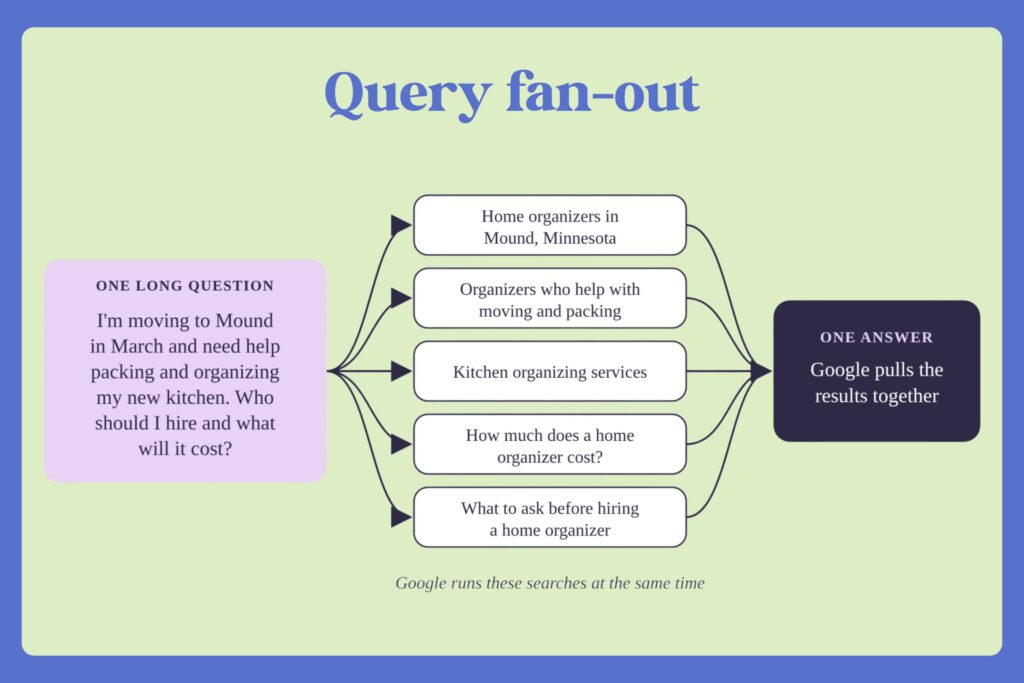
When someone asks a long, detailed question, Google breaks it into a bunch of smaller searches. It runs them all at the same time, then pulls the answers together into one response. That’s query fan-out.
Here’s an example. Someone types: “I’m moving to Mound in March and need help packing and organizing my new kitchen. Who should I hire and what will it cost?” Behind the scenes, Google might search:
- Home organizers in Mound, Minnesota
- Organizers who help with moving and packing
- Kitchen organizing services
- How much does a home organizer cost?
- What to ask before hiring a home organizer
Now think about what that means for your site. An organizer with a clear kitchen organizing page might get pulled in for that piece. One with a pricing FAQ might get pulled in for the cost piece.
The organizer with one vague services page, everything crammed together? She probably doesn’t show up for any of it.
Your page doesn’t have to win the whole question. It just has to answer one small piece really well.
You Should Be Focusing on Topical Authority
Topical authority means Google can see you know your topic deeply. Not that you wrote one post about it. That you’ve covered it from every angle your customers care about.
It ties straight back to query fan-out. The more questions you answer around your topic, the more chances you have to get pulled into an answer.
Even topics you know won’t bring much traffic can be worth writing about. I just delivered an SEO audit where I told a client to write about a few of those anyway, because it rounds out her authority on her main topic.
Start by picking your core topics, then build content around the questions people already ask about your services. I break this down for one type of service business in SEO for Home Organizers: How To Get Found on Google.
Quality still beats volume. I saw someone in a Showit forum recently build a ton of pages and tank their SEO. Don’t build a page for every tiny search term unless you have real content behind it.
What Google’s 2027 Priorities Mean for SEO for Service-Based Businesses
Google shared five priorities at the summit. Here’s each one in plain English, and what it looks like on a service business website.
1. Rich Contextual Content
Explain who you are, what you do, where you do it, and why you do it. Not just a list of services. Make it yours, not whatever AI regurgitates.
For example, one of my home organizer clients realized her ideal clients all have a skylight calendar. I worked that into her copy because it talks straight to her customer.
2. A Personalized Experience From the Start
Results are built around the person searching, not just built for search. Yes, optimize for search. But optimize for your ideal customer too, and speak to them directly.
Here’s my test: if you wouldn’t say it in a conversation, don’t write it. I reviewed a homepage that opened with a long list of topics and a “thoughtful approach” to each one. Nobody talks like that. You’d say, “I help people do this, and here’s how.”
3. An Effortless Experience
Fewer clicks, less work. If it takes 14 clicks to get to checkout, that’s a problem. You want it under seven, and probably under three. Make the path to booking or buying clear.
4. Proactive Help
Keep building content around the questions people ask. Could your customer get everything they need right from your website?
Some people worry that means giving away their secret sauce. Answering the right questions is what makes people trust you enough to book you.
5. Going From Plan To Book Without Leaving the Flow
Someone should be able to go from researching to booking without bouncing around. That matters even more for agents, which we’ll get to next.
The line that stuck with me from the recap: it’s the age of good content. It feels like we’re going back to the foundation of good quality content that talks to your ideal customer. That’s what I’ve been pushing all year.
What Is Agentic Search?
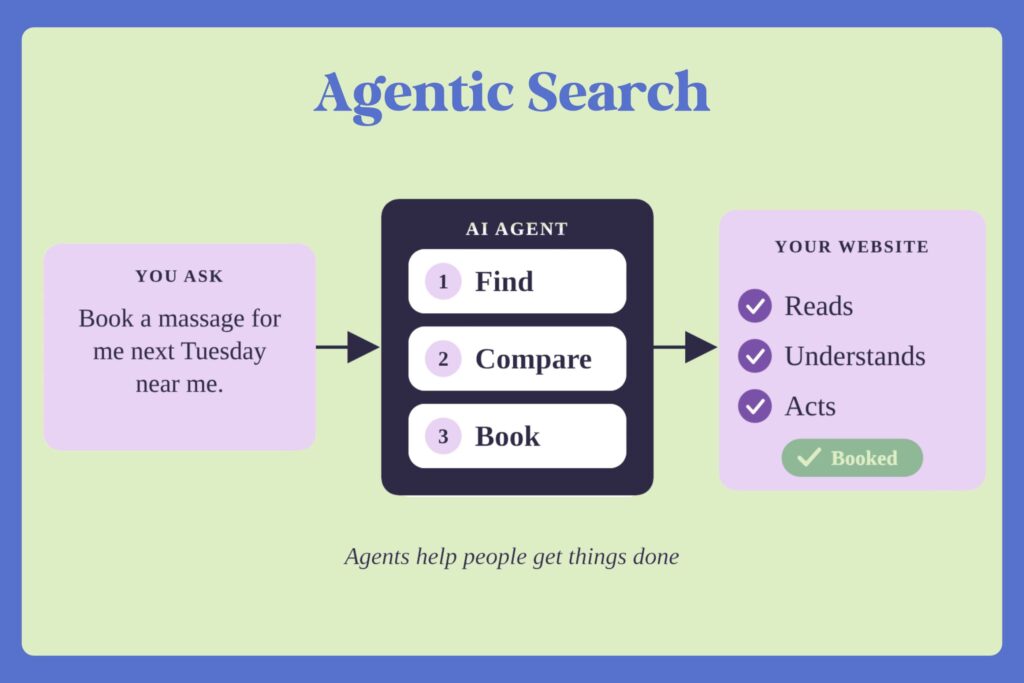
Agentic search means Google isn’t the only one answering questions. AI agents help people get things done: find, compare, and book. It’s already happening with restaurants and home services like plumbers.
So now you’re building your website for agents too. A bot needs to be able to read your site, understand it, and act on it. But the site still has to look and feel like it’s built for people, not bots.
Skip the shortcuts. According to the summit recap, LLM text files are worthless, and Google’s own guide to generative AI search says Google Search ignores them. You’re not building for the bot. You’re making it possible for the bot to get around, while you keep building for your customer.
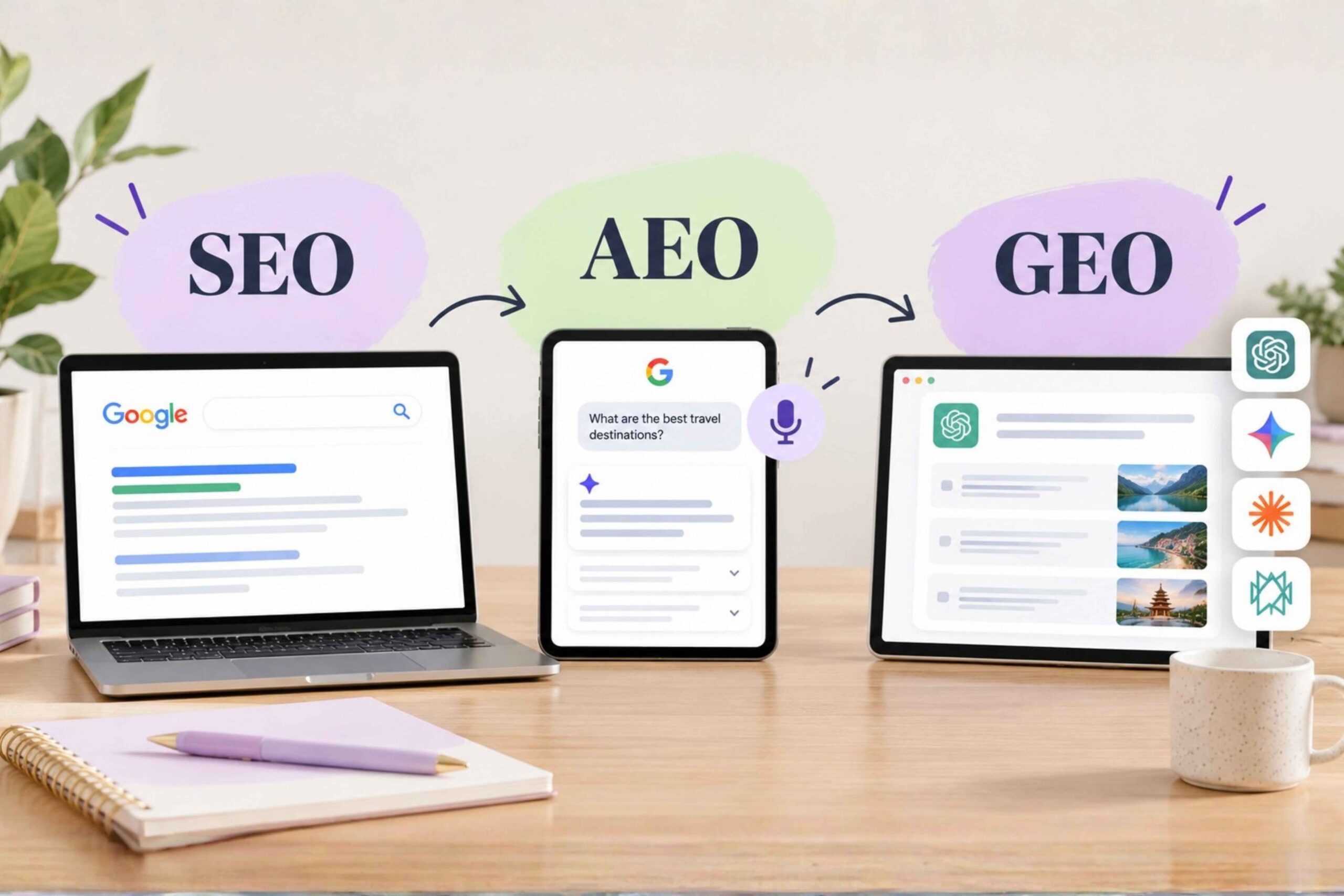
Say someone tells their AI assistant, “Book a massage for me next Tuesday near me.” Could a bot find your site, understand your services, and book it? I explain more in LLM SEO: Why You Don’t Need Separate AEO, GEO and SEO Strategies.
Down the road, I think this goes one step further with brand agents. These are AI chatbots on your website that know everything about your business. Someone’s personal agent could talk to yours and book the service without ever clicking around your site. My bot talking to your bot.
That’ll hit professional services like plumbers and restaurants first. Most of the business owners I work with aren’t there yet, and you don’t need to be.
How To Get Your Website Ready for Agentic Search
Start with these four:
- Look at your site the way a bot would. Can it find your services, pricing, location, and availability? Can it understand how deep your services go?
- Choose your core topics. List the questions your customers ask about each one, then answer them on your site.
- Rewrite key pages like you’re talking to one person. Use “I” and “you.” Skip the brochure voice.
- Count the clicks to book. If a customer has to hunt for the next step, fix it.
Frequently Asked Questions
Not really. An agent can only book you if it finds you, and it finds you through search first. If you’re not showing up for your service in your area, you won’t get booked.
If it’s a service you really offer, yes. A standalone page for something like kitchen organizing, with its own FAQs, pricing, and process, gives Google something specific to pull in. Location matters too, so say where you work.
Yes. Building your site so a bot can get around it goes hand in hand with accessibility, and ADA compliance is part of that. Even small details count, like using color pairings that meet accessibility standards. The W3C’s introduction to web accessibility is a good place to start.
Start Building Topical Authority Before 2027
Google now answers one long question by running a handful of smaller searches, and agents are starting to book appointments for people. The service businesses that get pulled in have a clear page for each service and real answers to the questions customers ask. Start building that topical authority now.
Want help getting your site ready? Take a look at my SEO services, or book a Baby Step coaching call and we’ll figure out your first move together.
And if you want the full conversation, listen to episode 99 of the Coffee & Conversions podcast.