Why I’m No Longer Doing Pinterest Management
Filed Under

I’ve managed Pinterest accounts for clients since 2020. I built a Pinterest course. I’ve talked about Pinterest on this podcast more times than I can count.
And I’m no longer doing Pinterest management.
This isn’t a “Pinterest is dead” post. It’s my honest take on what changed for me, what the numbers actually say about Pinterest right now, and where I’m putting my time instead. By the end, you’ll know how to tell if Pinterest still deserves a spot in your own strategy.
This post covers the highlights, but I share a lot more context in the episode. Listen to Episode 97 of Coffee & Conversions below to hear the full story, including the numbers that made me finally make the call.
What Is an Outbound Click on Pinterest (and Why Does It Matter So Much)?
An outbound click is when someone sees your pin and actually clicks through to your website. That’s it. That’s the number that matters.
Impressions are fine. Saves are nice. But if nobody leaves Pinterest and lands on your site, Pinterest isn’t doing anything for your business.
Here’s the trap. I could boost my impressions and save easily by posting my design work. But the people saving pretty pictures aren’t my ideal clients. They’re not looking for SEO or web design. They’re looking for inspiration, and then they keep scrolling.
My Pinterest Outbound Clicks Dropped 90%
In 2024 and into 2025, I was averaging around 200 outbound clicks a month from Pinterest. That might not sound like a lot. But for an account outside Pinterest’s big topics (food, workouts, fashion, home decor), it wasn’t bad.
That number has dropped about 90%. I’m now averaging 10 to 20 outbound clicks a month.
And it’s not just me. The clients I’ve managed over the past couple of years have seen the same kind of drop. Pinterest’s own community forum is full of creators saying the same thing. Some larger publishers reported their outbound clicks falling about 30% almost overnight, and others said they lost most of their reach in a matter of months.
Forum posts aren’t hard data. But when that many people report the same thing and I’m watching it happen in my own analytics, it’s worth paying attention to.
Is Pinterest Dead? I researched and here’s what I think
Short answer: no. If you only listened to Pinterest, you’d think everything is amazing.
In its second quarter 2026 earnings report, Pinterest reported 640 million monthly users worldwide (up 11%) and about $1.18 billion in revenue (up 18%). Those are record numbers. Pinterest also said outbound clicks to advertisers grew 40% in late 2025.
So how can clicks be up while so many of us watch ours go down? When I dug into the numbers, a few things stood out:
- Most of the user growth is happening outside the US. Users in the US and Canada only grew about 4%. If your clients are in the US, that’s the number that matters to you.
- Ads are taking up more of the feed. Ad impressions are growing, and Pinterest is making more money from each user. More ads means less room for free, organic pins.
- That 40% click growth was clicks to advertisers. Pinterest doesn’t break out how much of it is organic, or which topics are getting the clicks. It could be recipes and workouts, not service businesses like mine.
To be fair, I do believe Pinterest ads are a great bang for your buck. But I’m not running ads, and most of my clients weren’t either.
Both things can be true. Pinterest can be growing, and your free traffic can still be shrinking. I break down each of these numbers in more detail in the episode, so give it a listen if you want the full picture.
What’s Working on Pinterest Right Now
From what I’m seeing, Pinterest is rewarding fresh, custom, stylized pins. Pins that look like a real person made them with care, not pins pulled straight from a template.
Even Pinterest-focused agencies are saying this. One agency’s 2026 advice is to create three to ten new pins every week for every blog post or product you’re promoting, with different creative angles for each one.
Think about that. Three to ten new pins, every week, for every single link. That’s a lot of design time.
I’m a pro at batching pins, and that used to work really well. Now batched, template-style pins blend in with all the AI-generated images flooding the platform. The bar for standing out keeps going up, because your pins can’t look like AI made them.
The pins that win right now look human and intentional. And honestly? I don’t have time to give that level of care to every pin. Not for my own business, and not at a price that makes sense for my clients. P.S. My blogs on Pinterest aren’t going anywhere if you want to check them out: Pinterest Marketing.
Not Everyone Agrees With Me (and That’s Okay)
I want to be fair here. Jenna Kutcher, who a lot of you probably know, is still all in on Pinterest. She says it’s her number one source of organic traffic, and she teaches a strategy that takes under an hour a week. I used a lot of her philosophy in my own Pinterest management for clients.
Two things are worth knowing, though. She’s an approved Pinterest partner who sells a Pinterest course, so she has a stake in Pinterest doing well. That doesn’t make her wrong. It’s just context. And a big account with years of momentum is going to have a very different experience than a small business starting out today.
My perspective comes from managing Pinterest for regular small business owners. That’s where I’ve watched the results shift over the last couple of years. I get into this more on the podcast, so tune in to the episode if you want my full take on the two sides.
Where I’m Putting My Time Instead: Google and AI Search
My time is going into holistic organic search. That means blogging, podcasting, and writing content that gets found on Google and in AI tools like ChatGPT and Gemini.
And yes, I know what you’re thinking. Google traffic is dropping too. I’m not going to pretend it isn’t. One study from Seer Interactive found that when Google shows an AI Overview, organic click-through rates drop 61%. Pew Research Center found something similar: people clicked a regular search result in just 8% of visits when an AI summary showed up, compared to 15% when it didn’t.
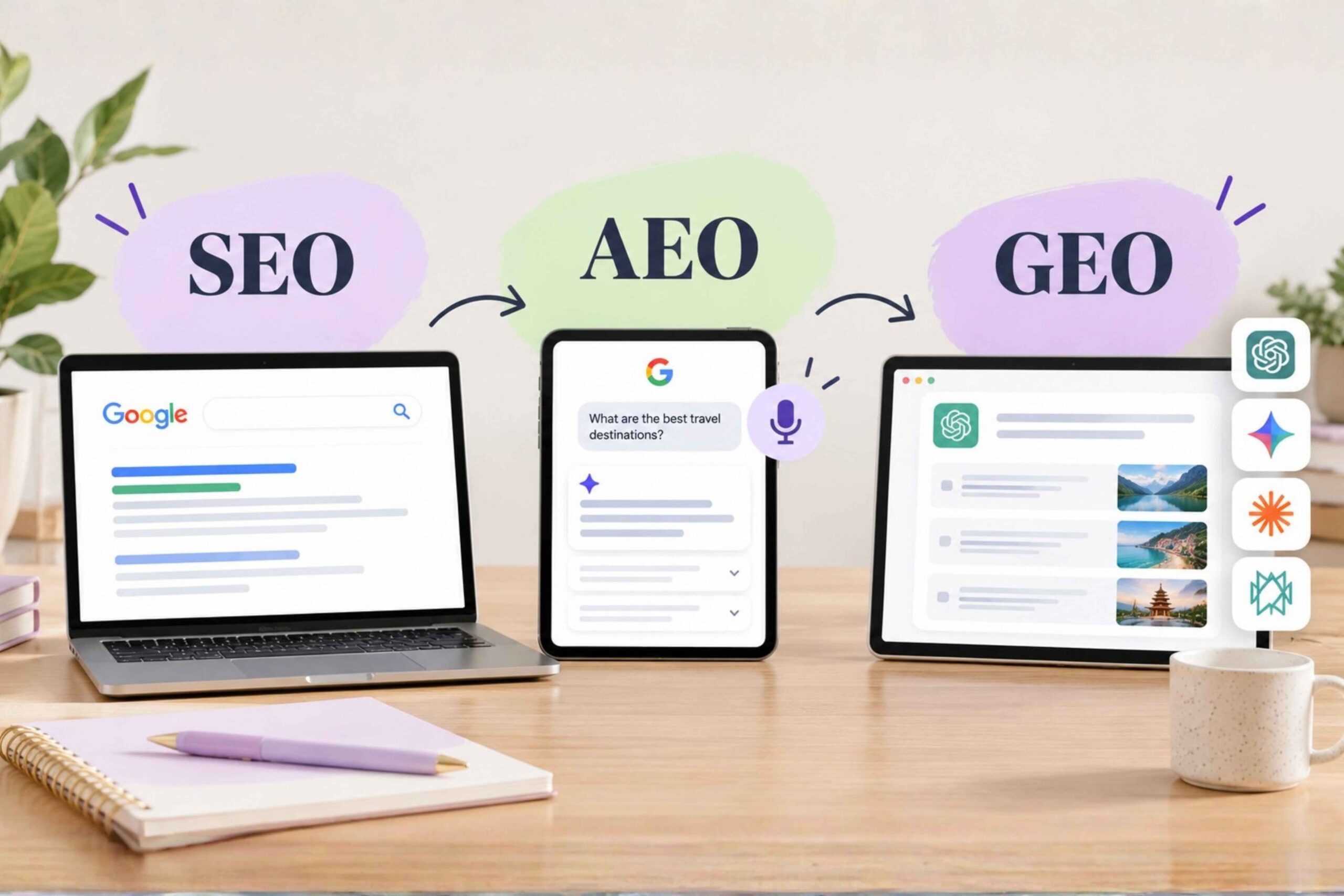
So I’m not swapping one shrinking channel for another. The game has changed. Old school SEO was about ranking in the blue links and hoping people clicked. Now it’s about being the source that Google and AI tools pull from and cite. That same study found brands cited in AI Overviews earn more clicks than the ones that aren’t. I wrote more about this shift in my post on why you don’t need separate AEO, GEO, and SEO strategies.
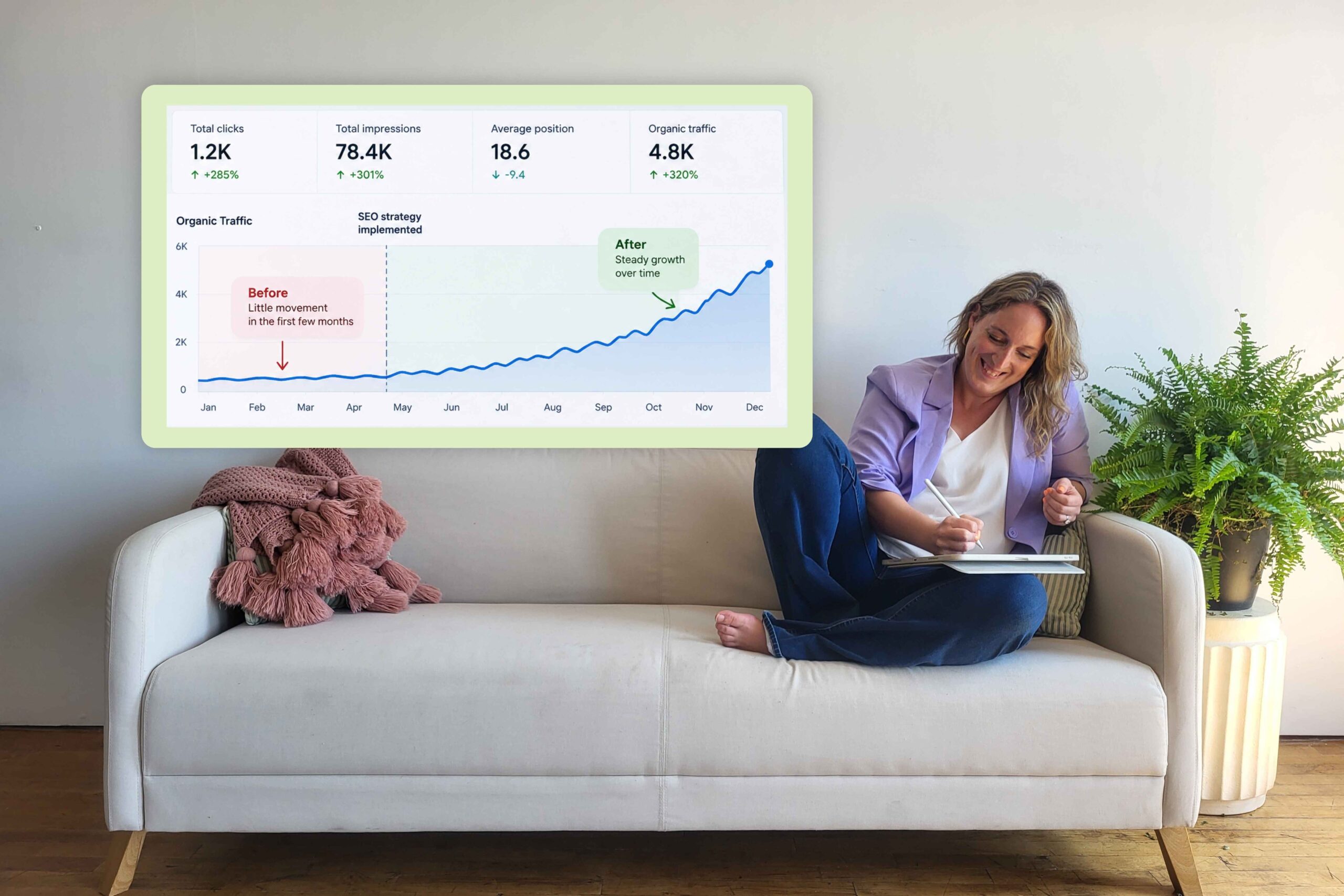
This strategy rewards small business owners who are good at what they do. A real point of view, real experience, and real expertise. And one blog post can show up in a lot of places: on Google, in AI answers, and yes, on Pinterest if you want to pin it.
The best part? You own that content. It lives on your website, not on a platform that can change the rules overnight. It also fits how I already work, since every episode of this podcast becomes a blog post.
If you’d rather have someone handle this for you, my SEO services are built to help small businesses get found on Google and AI search.
Should You Quit Pinterest? Who It Still Works For
Not necessarily. Pinterest just isn’t part of my strategy anymore. It could still make a lot of sense for you if:
- You’re in a very visual niche. Home decor, recipes, fashion, weddings, crafts, DIY, and home organizing still fit Pinterest well.
- You actually like designing. If making pretty pins sounds fun and not like a chore, and you have the time, go for it.
- You have the budget to hire it out. Just ask for recent results, and make sure they’re still getting outbound clicks on newer accounts.
- You already have a strong account that’s working. Don’t quit something that’s bringing in clicks.
If you want to keep going with Pinterest on your own, my Create It, Pin It, Let It Work course is still available and still relevant. I created it in late 2025. I’m stepping away from doing Pinterest management for other people, not from teaching it.
How to Tell If Pinterest Is Worth Your Time
The real lesson here isn’t “don’t do Pinterest.” It checks your numbers. Here’s how:
- Look at outbound clicks first. Skip past impressions and saves in your Pinterest analytics. Outbound clicks are what bring people to your site.
- Compare this year to last year. Look at the same months side by side so you can spot a real drop, not just a slow season.
- Check where your website traffic actually comes from. Google Analytics and Google Search Console will show you if Pinterest is still pulling its weight. My SEO monitoring tools guide walks you through what to look at.
- Track your time. Add up how many hours a week you spend on pins, then compare that to the clicks you’re getting.
- Ask for proof before you hire. If you’re paying for Pinterest management, ask for recent outbound click results, not just impressions.
Frequently Asked Questions
Pinterest management usually covers creating pins, writing keyword-rich pin titles and descriptions, organizing boards, scheduling pins, and checking analytics each month. A good Pinterest manager also tracks outbound clicks, not just impressions. If someone only reports impressions and saves, ask why.
You need a free Pinterest business account. Log in, go to Analytics, and select Overview. You’ll see outbound clicks for your whole account, and you can sort your top pins by outbound clicks to see which ones actually send people to your site. Pinterest’s help center breaks down every metric.
A pin click is when someone taps your pin and it opens up bigger on Pinterest. An outbound click is when they click the link and land on your website. Pin clicks show interest. Outbound clicks show traffic.
Not directly. Pinterest can send people to your site, but pinning a blog post won’t move where that post ranks on Google. Your rankings come from your content and SEO basics like keywords, page titles, and internal links. My one-page SEO checklist covers the basics. That’s why I build the blog first and treat Pinterest as a bonus.
You don’t need to. Pins you’ve already published can keep sending clicks for a long time, even if you stop pinning. Just stop pouring hours into it. Keep your profile linked to your website and check your outbound clicks every few months.
The Bottom Line: Pinterest may be right for you, but it’s no longer right for me
Pinterest is growing, but mostly outside the US, and with a lot more ads in the feed. Winning organically now takes fresh, custom pins every single week. For me, that time is better spent creating content that gets found on Google and AI search, where I’m not at the mercy of an algorithm that changes overnight.
Want to learn SEO yourself instead of hiring it out? I recommend SEO on Tap by Duo Collective. Use my code JULIEW for $50 off.
Before you make any decisions about your own Pinterest strategy, listen to the full episode below. I share the whole story, the numbers behind it, and more detail on who should stick with Pinterest. Then go check your own outbound clicks.