LLM SEO: Why You Don’t Need Separate AEO, GEO and SEO Strategies
Filed Under

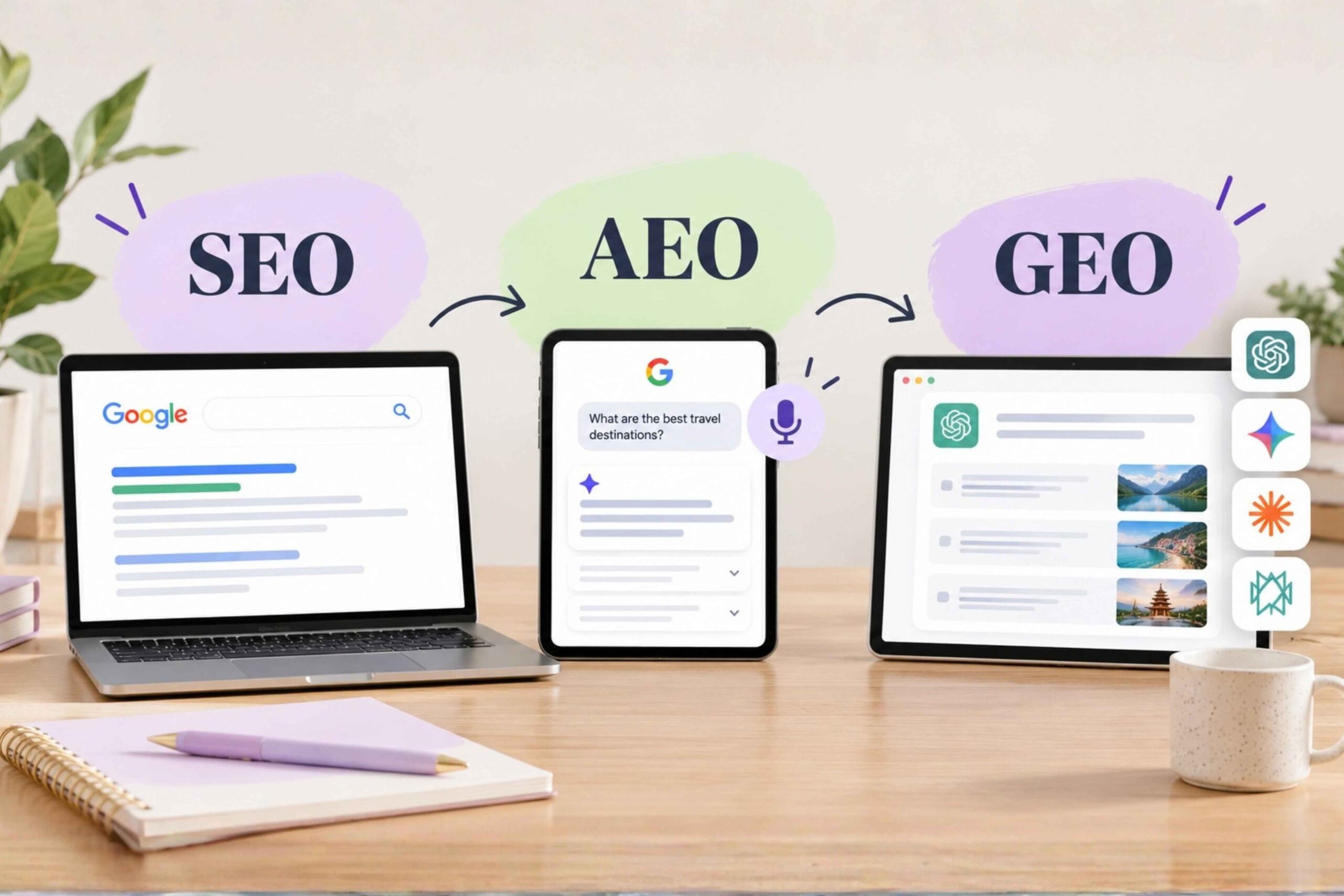
Recently, I was about 10 minutes into a call with a prospect who was a home organizer in Salt Lake City when she asked, “Okay, but will you do my AEO and GEO too? Not just SEO? And is SEO even still a thing?”
I could hear the overwhelm in her voice. She’d been reading about AI search, every expert was using a different acronym, and she felt like she was already behind.
If that’s you right now, let me be the first to tell you: you don’t need three separate strategies. LLM SEO, AEO, and GEO all start in the same place.
Here’s what I’ll cover: what SEO, AEO, and GEO actually mean, where they overlap, and what you should focus on first as a small business owner. You’ll also be able to spot when someone is trying to sell you something you don’t need (which is apparently my theme lately).
What Is SEO, and Does It Still Work?
SEO stands for search engine optimization. In simple terms, it’s making it easy for the right person to find you at the exact moment they’re looking.
When I started my first business about 6 or 7 years ago, I truly believed that if “if I build it they will come”. Guess what, that’s not a thing.
Your website can be beautiful, but SEO is what gets it seen. Search engines answer questions. SEO is how you become the answer.
Good SEO comes down to clarity, credibility, and relevance. Can people read your site? Does it build trust? Did you actually answer their question? If someone searches “massage therapist near me,” SEO is what helps a massage therapist in Mound, Minnesota show up on page one.
The basics include:
- Keywords your clients actually use when they search
- A clear, well-organized page structure
- A fast, mobile-friendly site (Google looks at the mobile version of your site first, so a clunky mobile site is a real problem)
- A Google Business Profile, especially for local businesses
- Quality content that answers real questions
So yes, SEO still works. It’s just not as simple as targeting one keyword and calling it a day.
What Is AEO? Featured Snippets SEO and AI Overviews
AEO stands for answer engine optimization. It’s about getting your content picked as the direct answer to a question.
Say someone searches “how often should I get a massage?” With AEO, your answer shows up in a featured snippet, an AI overview, or a voice search result. If you’ve been reading up on featured snippets SEO, it’s the same idea.
I’ve seen this work on my own site. My blog post on using Claude for Pinterest now shows up as the Google snippet for that question. A friend of mine shows up in the AI overview for the best Lululemon dupes on Amazon.
You can track this, too. Google Search Console now has a Generative AI performance report that shows your impressions in features like AI Overviews and AI Mode. If you’ve never poked around Search Console, my free SEO Monitoring Tools guide walks you through it.
Here’s the tradeoff. When your answer shows up right in the search results, you’ll often get fewer clicks, because the searcher already has what they need. The visibility is still worth it.
What Is GEO, and Where Does LLM SEO Fit In?
GEO stands for generative engine optimization. (Every time I hear GEO, I think of geography. It’s not.)
GEO, which you’ll also hear called LLM SEO, is about getting your business mentioned or cited when someone asks ChatGPT, Gemini, or Perplexity for help. LLM stands for large language model, the tech behind those AI tools.
AI searches tend to be much more detailed than Google searches. Picture a physical therapist who works with athletes and does in-home visits. Someone might ask ChatGPT to find a physical therapist near them who can come to their house, works with athletes, and knows how to treat their specific injury.
That’s a very specific search. Your job is to teach search that you’re the right fit. You do that through detailed service pages, blog posts about the exact situations you help with, and solid SEO foundations so your site can be found in the first place.
These AI tools pull from what’s already on the web. They need to see your business described clearly and consistently, in more places than just your website. That’s why an optimized Google Business Profile matters here, too.
One important note: no one can guarantee you’ll show up in AI answers. Anyone who promises that is overselling. I can set up your foundations so search learns who you are, what you do, and why you do it, but your competition and your content still play a big role.
Why LLM SEO Starts With Good SEO Foundations
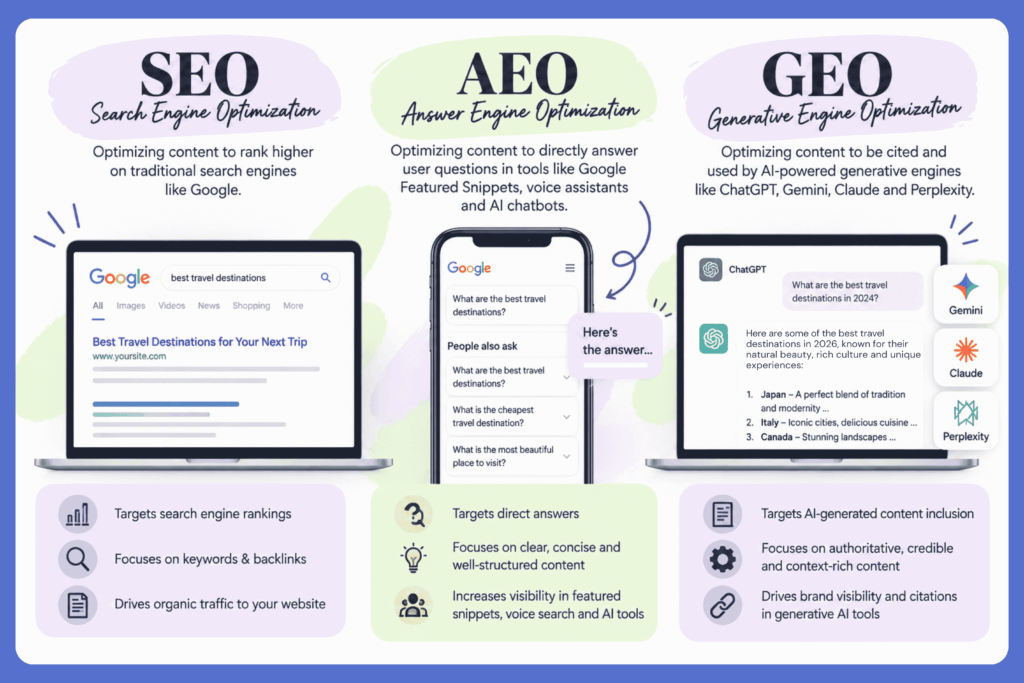
Here’s the part that should take the pressure off. SEO, AEO, and GEO all need the same thing: clear, well-organized, actually helpful content about what you do.
That content should be specific to you, whether it’s your location, your services, or the exact situations you help with. Write directly to your client and give real examples. And please don’t make stuff up just to rank. Google has plenty to say about that, which I break down in What Google’s AI Content Policy Actually Says About Your Content.
Even Google agrees. Its own guide to optimizing for generative AI features says the same SEO best practices still apply to AI search. If Google can’t understand your site, AI won’t understand it either. The way I like to put it:
“SEO is the house, the foundation. AEO and GEO are how you label the rooms and get the neighbors talking about it.”
How Has AI Search Changed My SEO Strategy?
Good foundations haven’t changed, but AI search has shifted how I deliver information. Here are the three biggest changes:
- Write blog headers as real client questions. Then answer the question in the first sentence or two. That’s exactly what answer engines look for.
- Add FAQ sections that answer real questions. Use questions people actually search for or have asked you, and write for the reader first.
- Keep your business info consistent everywhere. Your name, address, and services should match on your website, Google Business Profile, directories, and social media.
I go deeper on each of these in Episode 96 of Coffee & Conversions, including an honest confession about my own website. Listen to the full episode (the player is at the end of this post) for all the details.
How Does EEAT SEO Help Your AI Visibility?
EEAT stands for experience, expertise, authoritativeness, and trustworthiness. It’s how Google sizes up whether your content can be trusted, and those same trust signals play a big part in your AI visibility.
Here’s what I’ve seen work for clients getting cited by tools like Perplexity and ChatGPT:
- Strong, consistent Google reviews. Reviews that mention the specific service or result you provide help AI figure out who’s best for what. It looks at how consistent, frequent, and relevant your reviews are.
- A real about page. It shouldn’t be generic or too short. Show your credentials and your story.
- Mentions on other sites. Podcast interviews, local features, and community directories all tell search you’re a business people trust. (I’ll admit I’m not great at this one, because time.)
If you want to apply EEAT SEO to your own blog, my EEAT SEO blog checklist walks through what a good post needs.
What Should You Do First for Better AI Visibility?
If you’re staring at your website wondering if you’re ready for AI search, start here:
- Make sure your site’s SEO foundations are solid. This is the work I focus on with most business owners: getting the strategy, messaging, and structure right so you’re actually seen. My SEO services cover everything from a full audit and keyword plan to done-for-you implementation.
- Get your Google Business Profile working. Honestly, I hate Google Business Profile work, so I don’t do it. But I’m happy to point you to someone who does.
- Rework your top service pages. Talk to your client, answer their questions, and be detailed about what you do and why you can be trusted. I’ve worked with five home organizers this year, and for one retainer client we keep building content around specific services like pantry and closet organization, because that’s what people search for.
- Add helpful FAQ sections to your blogs and service pages.
- Build reviews and mentions outside your own site.
- Track your results in Google Search Console and Google Analytics so you know if you’re showing up.
Frequently Asked Questions About LLM SEO
What is LLM SEO?
LLM SEO is getting your business mentioned or cited when someone asks an AI tool like ChatGPT, Gemini, or Perplexity for help. It’s also called GEO (generative engine optimization). It works best when it’s built on strong SEO foundations.
What’s the difference between SEO, AEO, and GEO?
SEO helps your website show up in search results. AEO helps your content get picked as the direct answer in featured snippets, AI overviews, and voice search. GEO helps your business get recommended by AI tools. All three rely on clear, helpful, consistent content.
Does SEO still work now that people use AI search?
Yes. AI tools pull from what’s already on the web, so if Google can’t understand your site, AI won’t either. What’s changed is that you need more specific content that talks to your client in the words they actually use.
How can a small business improve its AI visibility?
Start with solid SEO foundations, then build detailed service pages, write blog headers as real client questions, and add helpful FAQ sections. Keep your business info consistent everywhere and collect Google reviews that mention your specific services.
Can anyone guarantee my business will show up in AI answers?
No. Anyone who promises that is overselling. A good strategy sets up your foundations so search understands who you are and what you do, but your competition and your content still play a big role.
So, Do You Need SEO, AEO, and GEO?
No. You need strong foundations. When you do SEO well, with clear answers, real expertise, and a consistent presence around the web, you’re already setting yourself up for AEO and GEO. LLM SEO is one strategy, not three.
It is harder to show up than it used to be. That’s why talking to your customer in the words they actually use matters more than ever.
Want a second set of eyes on your site? Book The Baby Step, my 1-hour SEO coaching call. We’ll look at your site together, and you’ll walk away with 3 to 5 clear next steps you can take right away. (Calls happen on weeknights or Sunday afternoons.)
And if this cleared things up, send it to a fellow business owner who’s drowning in acronyms.
Want the full conversation? Listen to Episode 96 of Coffee & Conversions below.